Life insurance and Covid

Previous looks at estimating Covid death risk from insurance rates:

From Canada:

Canadian life and health insurers paid $154 million last year in individual and group life insurance claims from deaths related to Covid-19, an industry group says.

The latest statistics published on Tuesday by the Canadian Life and Health Insurance Association (CLHIA) include details about benefit payouts related to the pandemic, as well as premium growth in life insurance and annuities.

An additional $150 million in disability claims was paid in 2020 above projections to support recovering workers.

Overall, the insurers paid $14.3 billion in life insurance benefits in 2020, $36.6 billion in health insurance benefits, and $46.2 billion in retirement benefits, the report said.

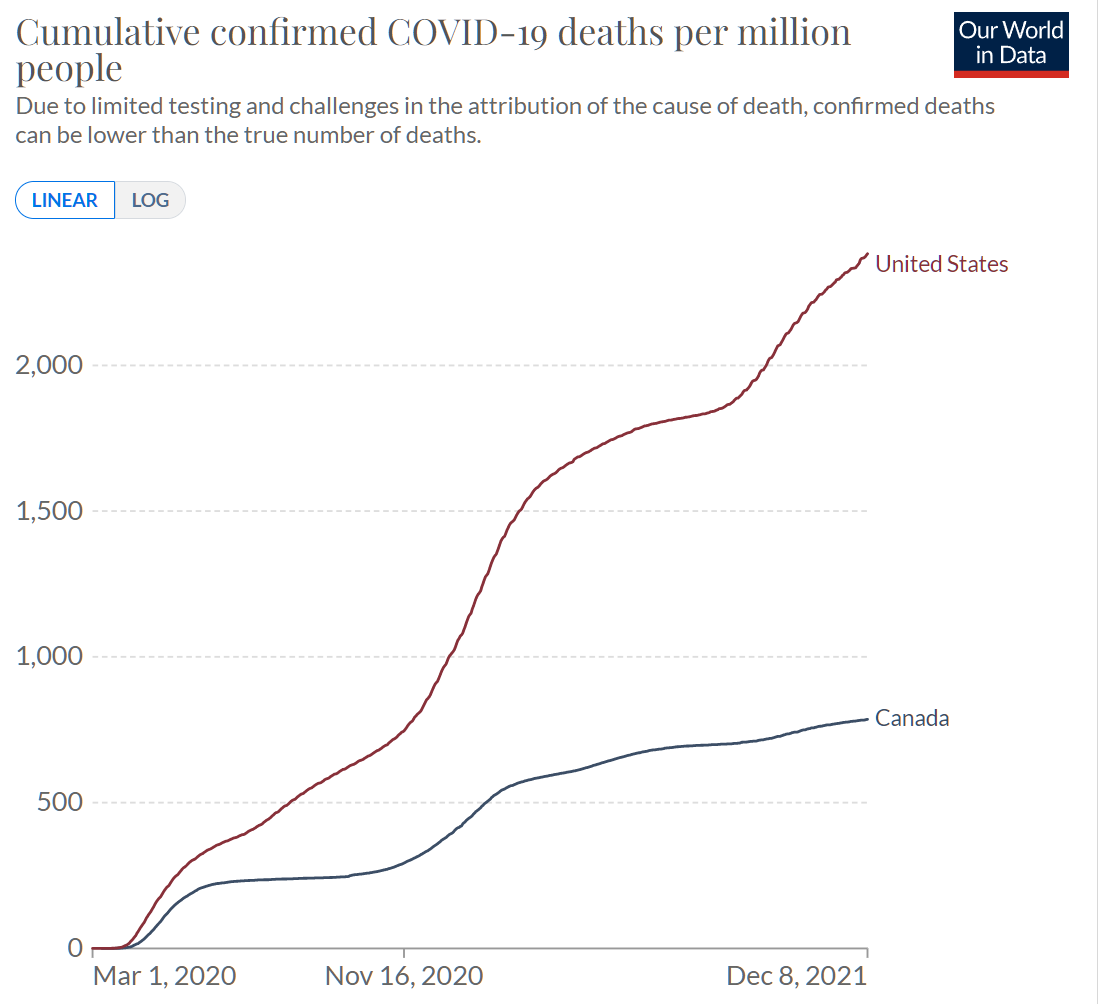
So the Covid-related death claims were 1 percent of the total in a county that had, in 2020, about 40 percent of the Covid-tagged death rate compared to the U.S.:

What about the overall increase in payouts in Canada? The same publication says that 2019 payments were $12.1 billion. That’s an 18 percent increase and, therefore, payouts went up by 17 percent for non-Covid reasons in 2020. Perhaps simply due to a big sales push 40 or 50 years ago?

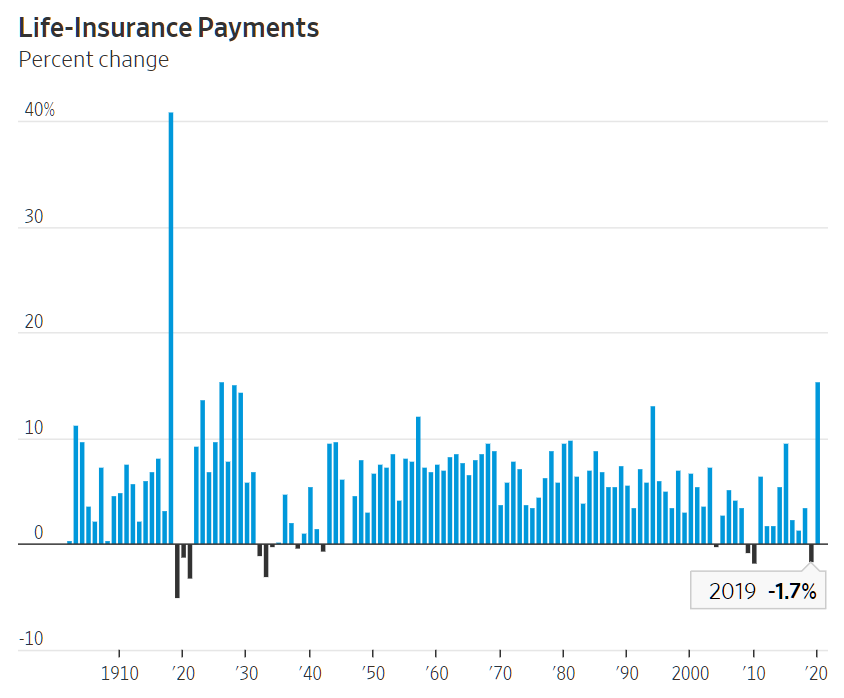
Today’s Wall Street Journal includes “Covid Spurs Biggest Rise in Life-Insurance Payouts in a Century”:

Death-benefit payments rose 15.4% in 2020 to $90.43 billion, mostly due to the pandemic, according to the American Council of Life Insurers. In 1918, payments surged 41%.

If we dig a little deeper, the article shows us year-to-year percentage changes. What happened in previous “surge years”? In 2015, payouts were up by 9.5%. In 1994, they were up by 13.1%. What was the great wave of death that swept the U.S. in 1994?

It looks as though 2019 was an unusually great year for life insurance companies (except those that sell a lot of annuities!). Payouts went down 1.7% despite population growth.

If we believe the Canadian data, adjusted for America’s higher Covid-tagged death rate, only about 2.5% percent of the 15.4% bump can be due to Covid. That would leave us with about 13% as the non-Covid increase, similar to the 1994 surge, and less than the 17% non-Covid increase that was experienced by Canadian life insurers.

Related:

Full post, including comments

What percent of GDP would we have to give to the health care industry in order to have enough Covid care capacity?

“U.S. Hospitals Feel Strained as Virus Cases Surge Again” (NYT, today):

As the Delta variant fuels hospitalizations in the U.S., health care systems struggle.

Health officials may be bracing for the Omicron variant to sweep through the country, but the Delta variant remains the more imminent threat as it continues to drive an increase in hospitalizations.

Health care workers said their situations had been worsened by staff shortages brought on by burnout, illnesses and resistance to vaccine mandates.

More than 55,000 coronavirus patients are hospitalized nationwide, far fewer than in September, but an increase of more than 15 percent over the past two weeks, according to a New York Times analysis. The United States is averaging about 121,300 coronavirus cases a day, an increase of about 27 percent from two weeks ago, and reported deaths are up 12 percent, to an average of about 1,275 per day.

Americans pay nearly 20 percent of GDP into the health care industry. 1 out of every 6055 Americans is hospitalized with/from Covid. That’s 0.017 percent of us. Nobody liked my April 2020 idea of building strip mall Covid care clinics like renal dialysis centers. Nobody likes the proven-to-work idea of home care for medium-sick Covid patients (NYT). So we’re apparently stuck with the model that everyone who needs supplemental oxygen will get it in a hospital bed (of which we have about 920,000). The NYT informs us that we don’t have enough capacity after paying 20 percent of GDP to the health care industry. So that leads to today’s question: how much would we have to pay in order to fund sufficient capacity?

(A friend is a business executive at a VA hospital. He said that the VA system set up some high-capacity Covid wards with appropriate ventilation systems to protect the rest of the hospital (filtering the exhaust air, unlike at private hospitals that dump Covid aerosols out into the environment!). He said that private hospitals won’t do this because Covid surges don’t happen often enough and therefore, profitable though it might be to treat an actual Covid patients, it wouldn’t be profitable to set up a big section that is usually idle.)

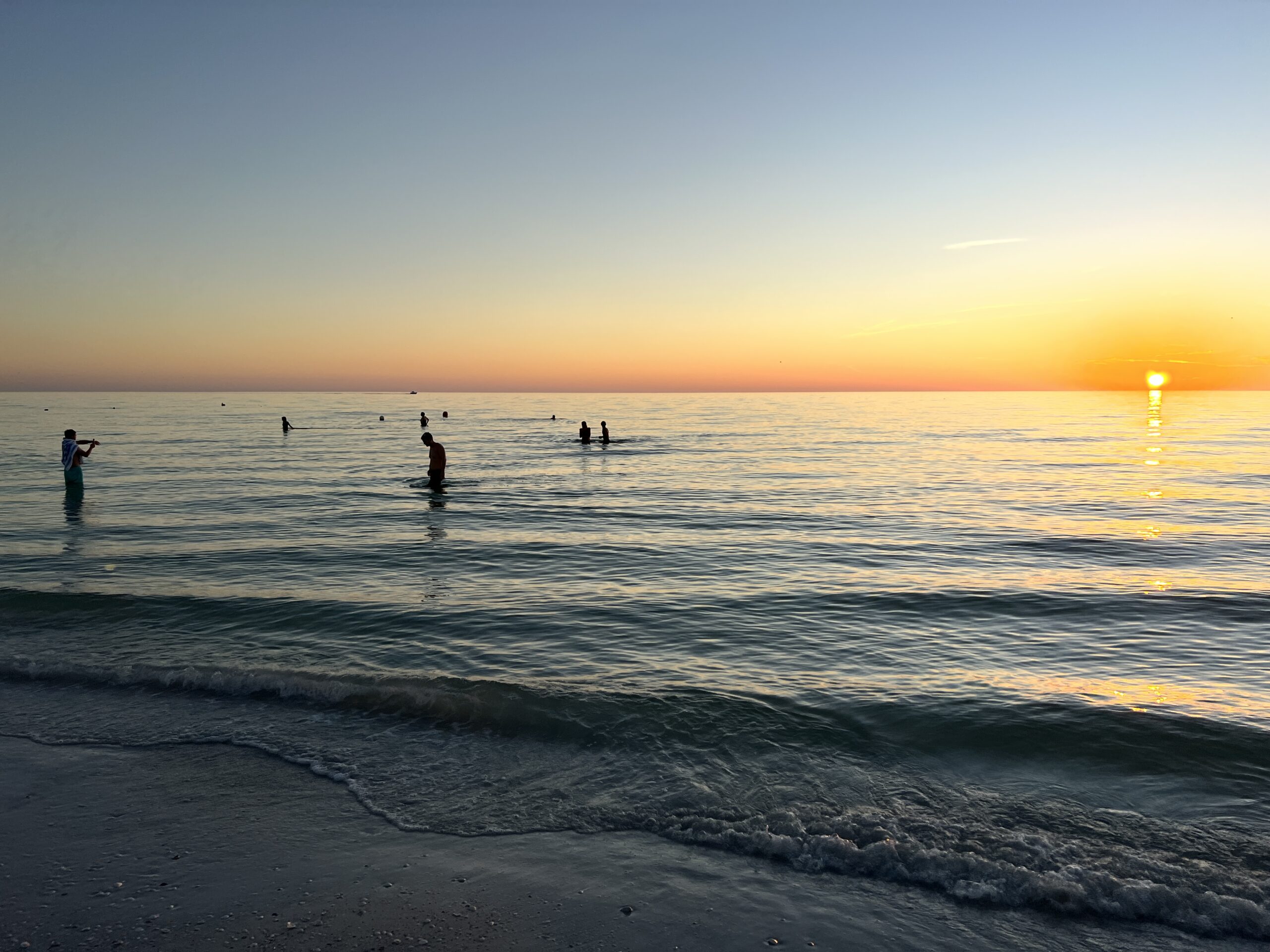
Note that Florida is edging out of the safe zone, according to CovidActNow. But, on the other hand, hardly anyone cares enough to talk about Covid, masks, vaccines, etc. From Marco Island, yesterday:

Full post, including comments

Omicron question of the day: What is the point of travel restrictions?

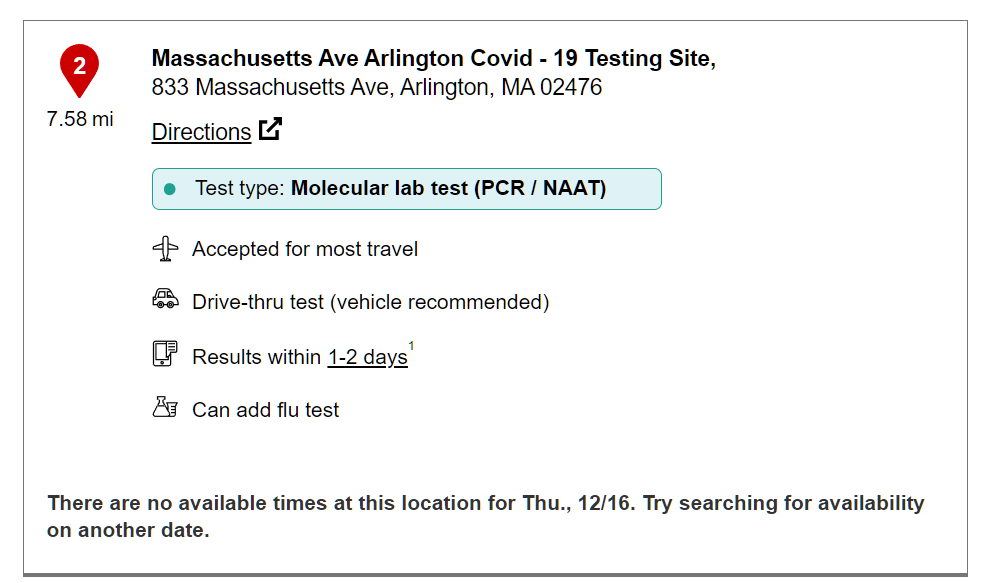
Following up on Omicron Question of the Day: What good is PCR testing that takes 2-3 days for a result?

A repeat of an earlier question asked here: What is the point of our travel restrictions?

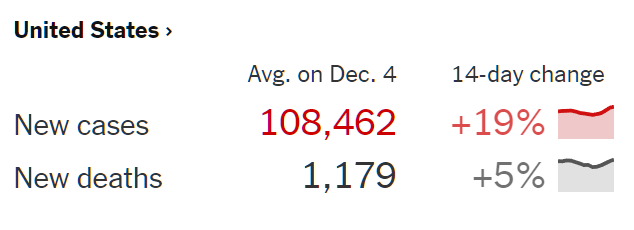
Knowing that current testing technology will flag perhaps at most half of those who are infected with SARS-CoV-2, we insist that people can’t come to the U.S. from abroad unless they’ve tested negative. This means that we’ve slightly cut the number of people who arrive into a country with 108,000+ “new cases” per day among those who are already here. NYT:

Our restrictions on documented travelers have proven useless in preventing a new variant from arriving in the U.S. and then spreading (see “Before Even Receiving a Name, Omicron Could Have Spread in New York and the Country” (NYT, 12/5)). The undocumented, of course, continue to cross the southern border without going through the testing and vaccine papers checks.

It would seem that we’ve had sufficient data to declare failure. If we want to keep people with COVID-19 out of the U.S. we have to close the borders to the documented and also somehow close the southern border to the undocumented. Or we could decide that, for whatever reason, we need open borders and we won’t bother hassling the documented travelers with demands for medical test results. But the current system seems irrational (especially closing the borders to people coming from certain African countries because we say that they’re likely to have a variant of COVID that is already in the U.S. and Europe and spreading in both places).

I know that we are #FollowingTheScience so obviously there is something I’m missing… but what is the explanation for keeping the current system after we have direct evidence of failure? The current system can’t be denting the number of infected people in the U.S. because there aren’t all that many documented travelers showing up compared to the 108,000+ daily positive tests here. The current system can’t be discouraging participation in the global COVID variant pool because the Omicron variant was first reported to WHO on November 24 with a first sample dated Nov. 9; it arrived in the U.S. no later than November 22 (CDC).

In case the testing hassles are discouraging you from going to Italy, a recent photo from Naples, Florida:

A friend just returned from Europe with the following report:

No Americans anywhere! … Rental cars in Italy were practically free as were hotels. Italians and Germans seem to have accepted their permanent masked fates with zero drama. They tend to wear inside and out, all ages. Everyone thinks Sweden is nuts and that the world has ended in America. Most I met with think the travel restrictions to the US are insane.

Rapid testing is everywhere, although on way home no one at any airport asked to see my test result, just vax status.

The systems in the EU all were digitally linked so a scan of their vax cards loads everything up everywhere. They thought my vax card was fake.

Related:

Full post, including comments

Omicron Question of the Day: What good is PCR testing that takes 2-3 days for a result?

One thing I love about SARS-CoV-2 is that the inevitable mutations enable me to ask the same questions over and over.

Suppose that Johnny starts feeling unwell after Art Basel. It takes him/her/zir/them a day or two to decide that it might be COVID and it is time to get tested. In a lot of states it might take at least one more day to arrange a test. After that, 2-3 days to get a result from the PCR toaster oven. Assuming a positive test, that puts Johnny 4-6 days after his/her/zir/their symptoms began when he/she/ze/they goes into isolation.

Let’s compare that to #Science. “COVID-19 Is Most Transmissible 2 Days Before, 3 DaysAfter Symptoms Appear” (Boston University/JAMA):

Each wave of the pandemic has underscored just how gravely contagious COVID-19 is, but there is less clarity among experts on exactly when—and to what extent—infected individuals are most likely to spread the virus.

Now, a new study co-led by a School of Public Health researcher has found that individuals infected with the virus are most contagious two days before, and three days after, they develop symptoms.

(They forgot to write “global pandemic”.)

In other words, by the time Johnny gets the PCR result, he/she/ze/they is mostly past the contagious phase. Wouldn’t the world have been far safer if we had a rule that anyone who is sick in any way has to be isolated (or, if unvaccinated, euthanized)?

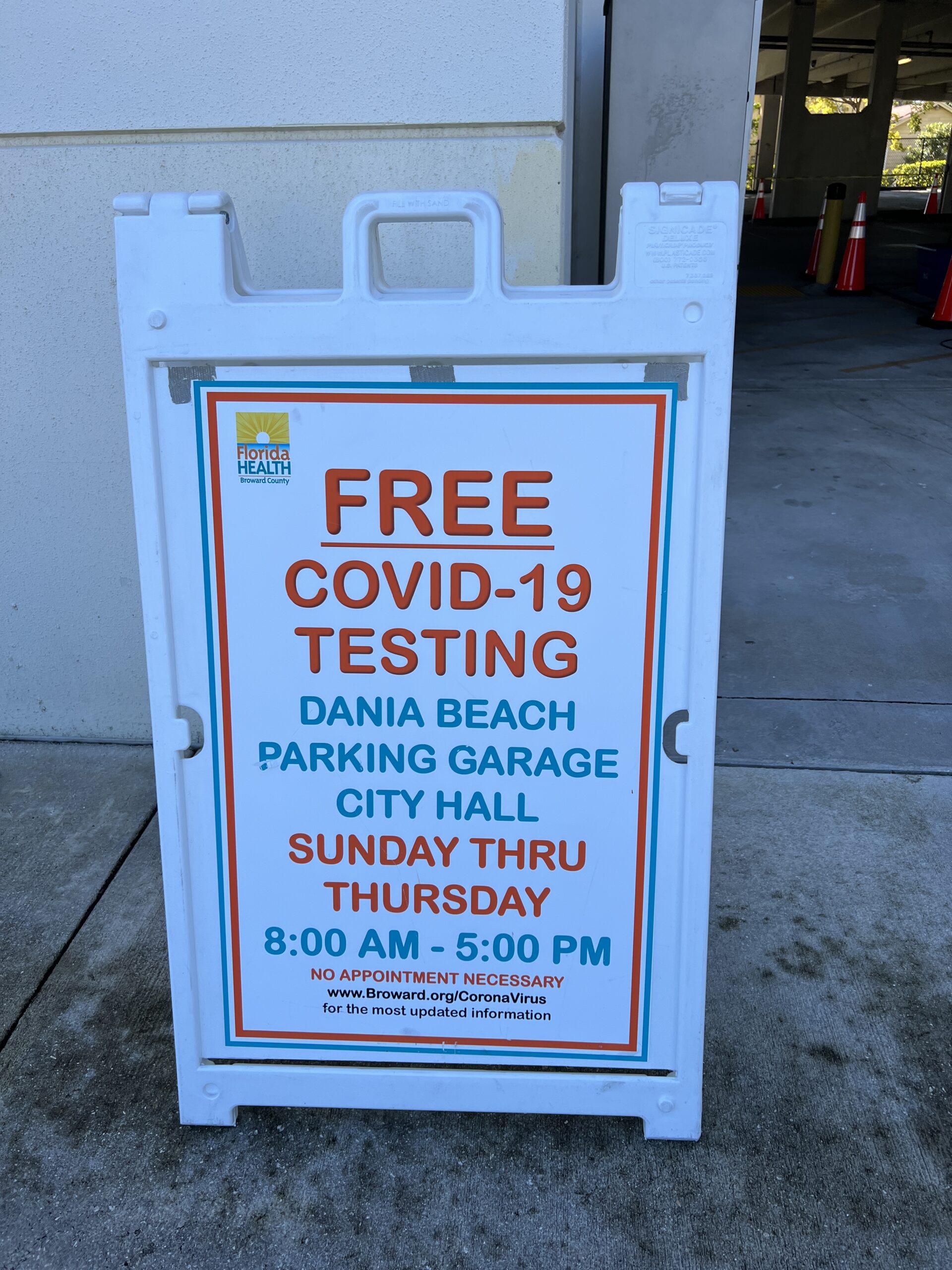
I recently parked in a garage in Florida that has been converted into the world’s loneliest drive-through COVID-19 testing facility (there is hardly any COVID left in Florida).

After $10 trillion in COVID-related federal spending, how long to get a result in a state with hardly anyone infected? “Two to three days,” said the helpful lady who was checking the non-existent customers in. (I went back and forth to the car a few times and never saw anyone come in to be tested; about 6 people seemed to be working at this facility.)

Readers: Please explain to me under what circumstance this kind of PCR test has a practical value.

Full post, including comments

Parking at Art Basel: the high school across the street (also some masketology)

If you’re going to Art Basel (today and tomorrow are the last two public days; the elites went on Tuesday and Wednesday), the pro move is to park at Miami Beach Senior High School, where the PTA opens the vast parking lot as soon as school closes (3:15 pm is the end of classes). Navigate to 2231 Prairie Avenue, Miami Beach, Florida 33139 and hand over $20, which will fund PCs, printers, and other classroom items. Ferraris, C8 Corvettes, and Lamborghinis are assigned to an “exotic area” in the grass where nobody can hit them with a door. (I wonder if Miami Beach during Art Basel has the world’s highest ratio of maximum theoretical car speed to actual car speed?)

The event closes at 7 pm and three hours is enough to see most of what you’d want to see. Reserve for dinner at Bella Cuba afterwards so that you skip most of the post-event traffic.

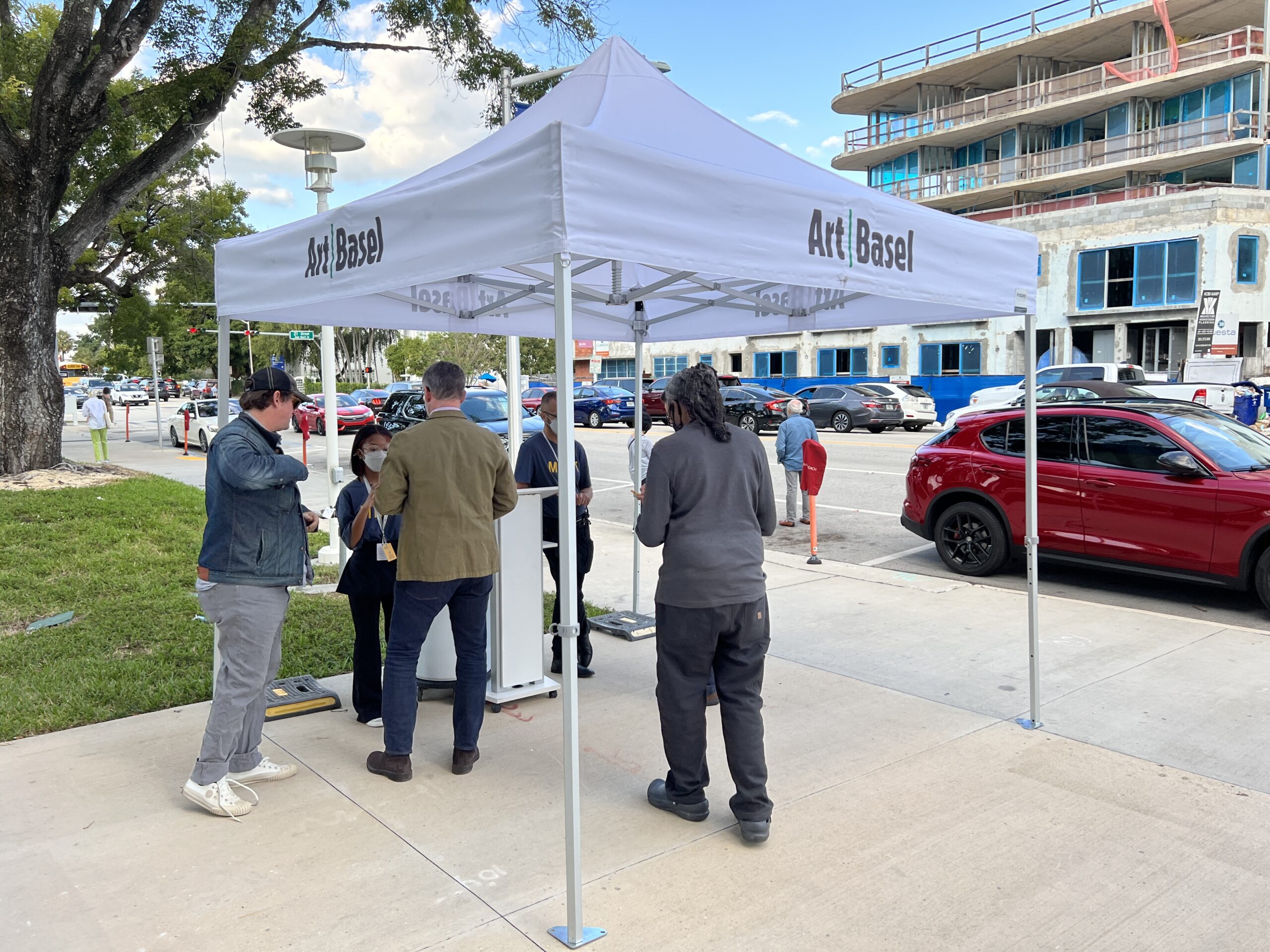
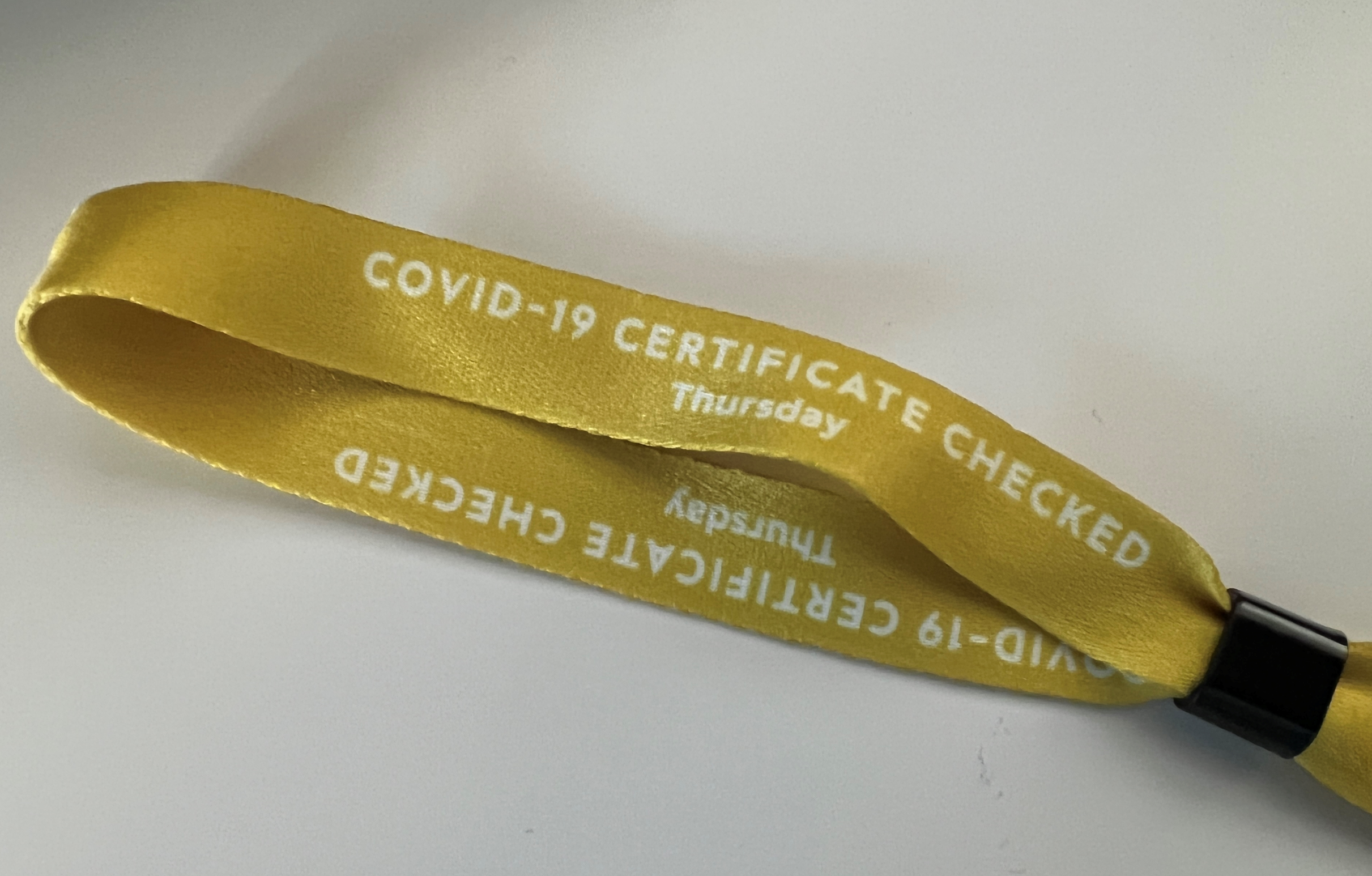
Remember that you need to show vaccine papers before the Art Basel folks will give you a “COVID-19 Certificate Checked” wristband. The good news for the unvaccinated is that you show a picture of your CDC card on your phone and therefore the name on the certificate is too small to be matched to your photo ID (not that there is any serious attempt to do so).

Here’s the vaccine papers check tent:

And the precious result:

(Wouldn’t it be a lot simpler if the U.S. adopted Philip’s RFID chip-in-the-neck idea?)

A couple of hours earlier, a mid-career artist at a party said, “You’re not going to get a grant unless your work is about BLM or LGBTQ.” If she is right, here’s an artist on track for a grant:

Masks are required inside and, since it is Florida and people can’t be expected to carry masks, they’re handed out by official Mask Karens. Not everyone can be reached by #Science, however…

Here’s one of the official Mask Karens demonstrating proper under-nose mask position:

Given the international crowd and the near-certainty of being exposed to the Omicron variant (state-sponsored media reassures us by quoting an innumerate 79-year-old who reminds us not to panic), did a lot of folks choose to use a fresh N95 respirator combined with hand-washing, hand-sanitizing, and never touching the mask? No. Cloth masks, which have been proven useless in a randomized controlled trial, were by far the most popular choice. These had been pulled from purses and pockets and therefore were pre-soaked with whatever bacteria and viruses can thrive on a moist face rag. A lady walking in front of me did not notice that she’d dropped her cloth mask on the sidewalk while getting something else from her purse. I picked it up (by the loops) and handed it to her, confident that the sidewalk germs will eventually be on her lips in addition to Omicron.

The people who are there to transact business (I didn’t hear of anything for sale at less than $220,000) were generally unmasked. In other words, those most likely to have come off multi-hour flights from plague centers were the least likely to be masked. Example:

Overall, I would say that the COVID-related aspects of the affair were handled exactly as well as you’d expect in a country that has to import all of its LCD and OLED displays and most of its integrated circuits (“chips”) from more detail-oriented nations. When it comes to COVID-19 vigilance, Yoda reminds us “There is No Try” (title of the 2020 work below by Tom Sachs):

Do. Or do not. But also, it is okay to do sometimes and sort of. And make sure to vaccinate The Child (Grogu, not to be confused with MIT’s Grogo).

Full post, including comments

Karen’s workaround to a ban on checking vaccine papers

If you read the news, you might think that Floridians are protected from demands to show medical records, such as vaccine papers. A November 18 story about a new law (passed by the actual Legislature; unlike other states, Florida is not simply ruled by executive order under emergency powers):

  • Private Employer COVID-19 vaccine mandates are prohibited.
  • Government entities may not require COVID-19 vaccinations of anyone, including employees.
  • Educational institutions may not require students to be COVID-19 vaccinated.
  • School districts may not have school face mask policies.
  • School districts may not quarantine healthy students.

How can Karen work around the spirit of this law? From the Baker art museum in Naples, FL:

  • Guests ages 12 and over must provide proof of a professionally administered rapid antigen test taken no more than 24 hours prior to the performance date or a professionally administered negative COVID-19 PCR test taken no more than 72 hours prior to the performance date.
  • In lieu of a negative COVID-19 test, voluntary proof of being fully vaccinated against COVID-19 may be presented.
  • In all cases, a valid matching photo ID must also be presented.
  • Ticket holders who do not comply with these policies will not be allowed into The Baker Museum or events on the cultural campus and may be required to leave.

So you need to bring part of your medical record (recent COVID test) or show a different part of your medical record (vaccine card). Either way, it is all voluntary.

On the other coast, the Norton Museum in West Palm Beach:

  • The health and safety of our guests is a top priority for the Norton Museum. Beginning October 1, 2021, guests (ages 12+) visiting the Norton Museum of Art will be required to show proof of a negative COVID-19 professionally administered PCR test taken within 72 hours; or a negative COVID-19 Antigen Rapid Test conducted within 24 hours; OR voluntarily show proof of COVID-19 vaccination (together with a valid photo ID for ages 18+).
  • Masks are required at all times regardless of negative tests or vaccination status,

How about the pop-up Art Basel at the city-government-owned Miami Beach Convention Center?

  • Every visitor age 12 and older will be required to provide proof of a negative, lab-administered COVID-19 test in order to gain access to the halls. Alternatively, visitors may opt to voluntarily provide proof of a completed COVID-19 vaccination or documentation of recent recovery from COVID-19 – issued by a licensed healthcare provider or facility – to gain entry.
  • In compliance with the Art Basel Miami Beach policy and safety regulations, wearing a mask covering mouth and nose will be mandatory inside the venue for anyone age 2 and older, whether vaccinated or unvaccinated.

Some photos from a 2018 visit to Art Basel (mask-free and no medical records check):

And, for Joe Biden:

(The Leader of the Righteous: “Unless we do something about [busing for desegregation], my children are going to grow up in a jungle, the jungle being a racial jungle with tensions having built so high that it is going to explode at some point. We have got to make some move on this.”)

Speaking of the Biden family, I wonder how many of Hunter Biden’s $500,000 paintings will be shown at Art Basel. It would be worth showing one’s vaccine papers to get a close look at these. Considering gallery fees and taxes, if Hunter Biden can sell only 20 works at $500,000 each, he will have recovered the $2.5 million that his child support plaintiff earned.

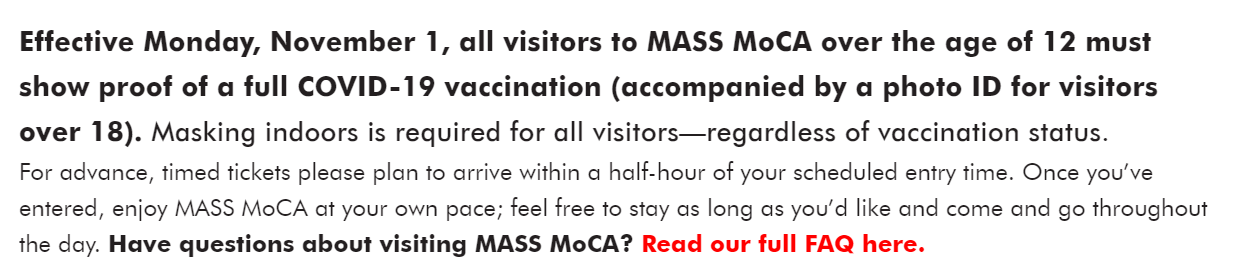
Maybe the requirements are looser back in Maskachusetts, since Covid has been controlled via universal vaccination, indoor mask orders for adults, school mask requirements for kids, and after-school sports mask requirements? (only 2,500 cases per day currently, compared to 2,400 in April 2020) From MassMoCA:

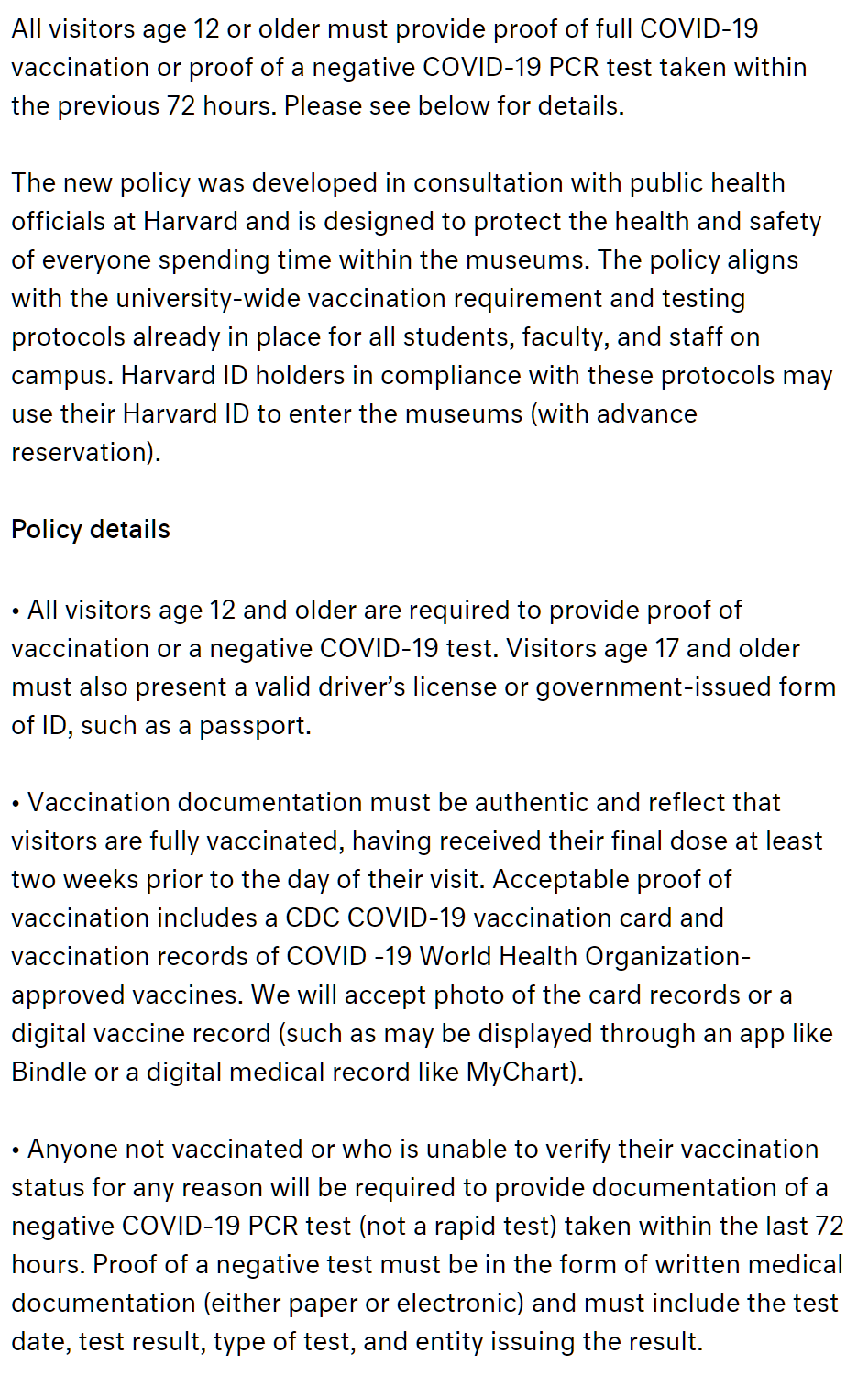
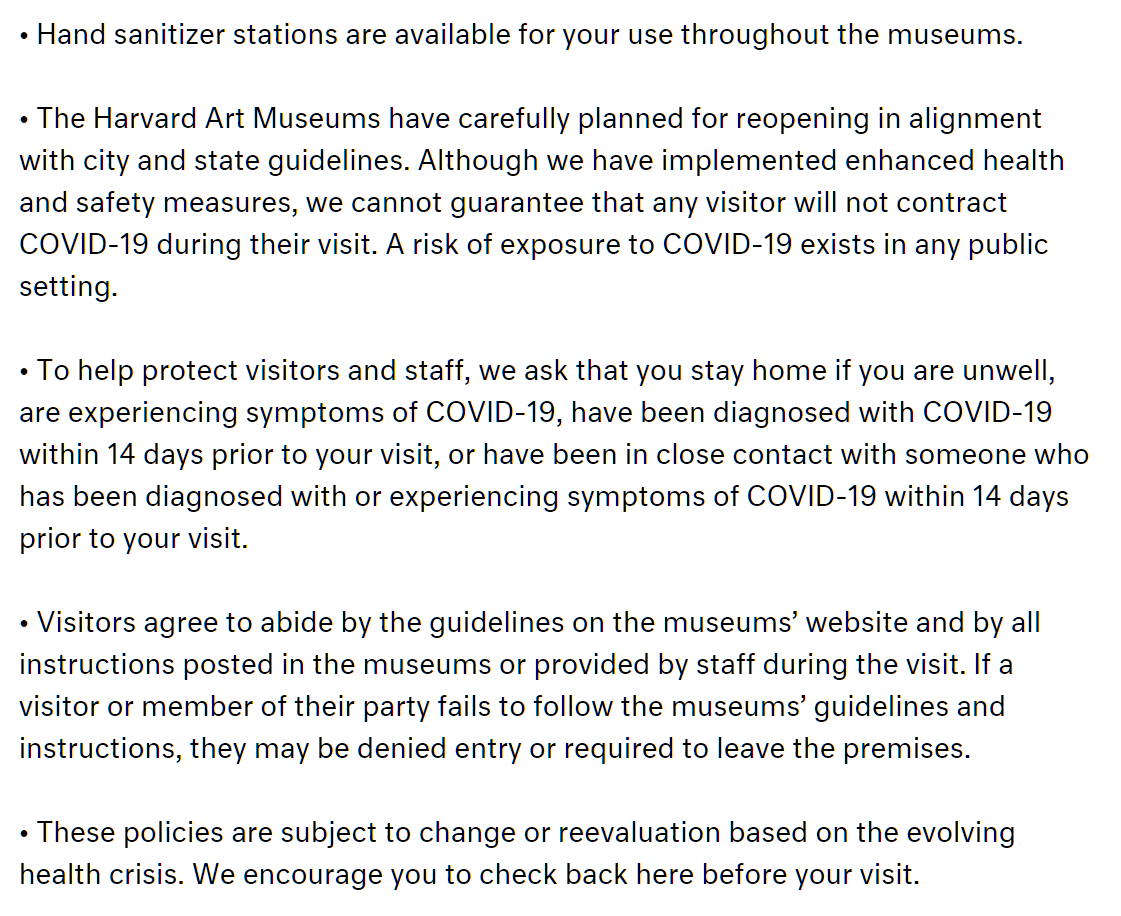
The plague-carrying unvaccinated cannot even think of entering, no matter how high the stack of PCR tests. Harvard has a similar policy for its museums, which were entirely closed for 1.5 years:

  • All visitors age 2 or older, regardless of vaccination status, are required to wear a face covering.
  • All visitors age 12 and older are required to provide proof of vaccination or a negative COVID-19 test. Visitors age 17 and older must also present a valid driver’s license or government-issued form of ID, such as a passport.
  • Vaccination documentation must be authentic and reflect that visitors are fully vaccinated, having received their final dose at least two weeks prior to the day of their visit. Acceptable proof of vaccination includes a CDC COVID-19 vaccination card and vaccination records of COVID -19 World Health Organization-approved vaccines. We will accept photo of the card records or a digital vaccine record (such as may be displayed through an app like Bindle or a digital medical record like MyChart).

Some screen shots capturing this most epic of web pages:

I am longing for the day when every American will be able to get the purely voluntary RFID chip in his/her/zir/their neck so that vaccine status can be checked efficiently and contact tracing can be performed after a variant outbreak is discovered. Nobody will be required to get a chip, of course, but the “chip-hesitant” person will find that he/she/ze/they cannot go to restaurants, museums, airports, etc. Or maybe a chip-hesitant American will have to wait in a 45-minute line for a paper document check if he/she/ze/they wants to do anything outside his/her/zir/their home.

Full post, including comments

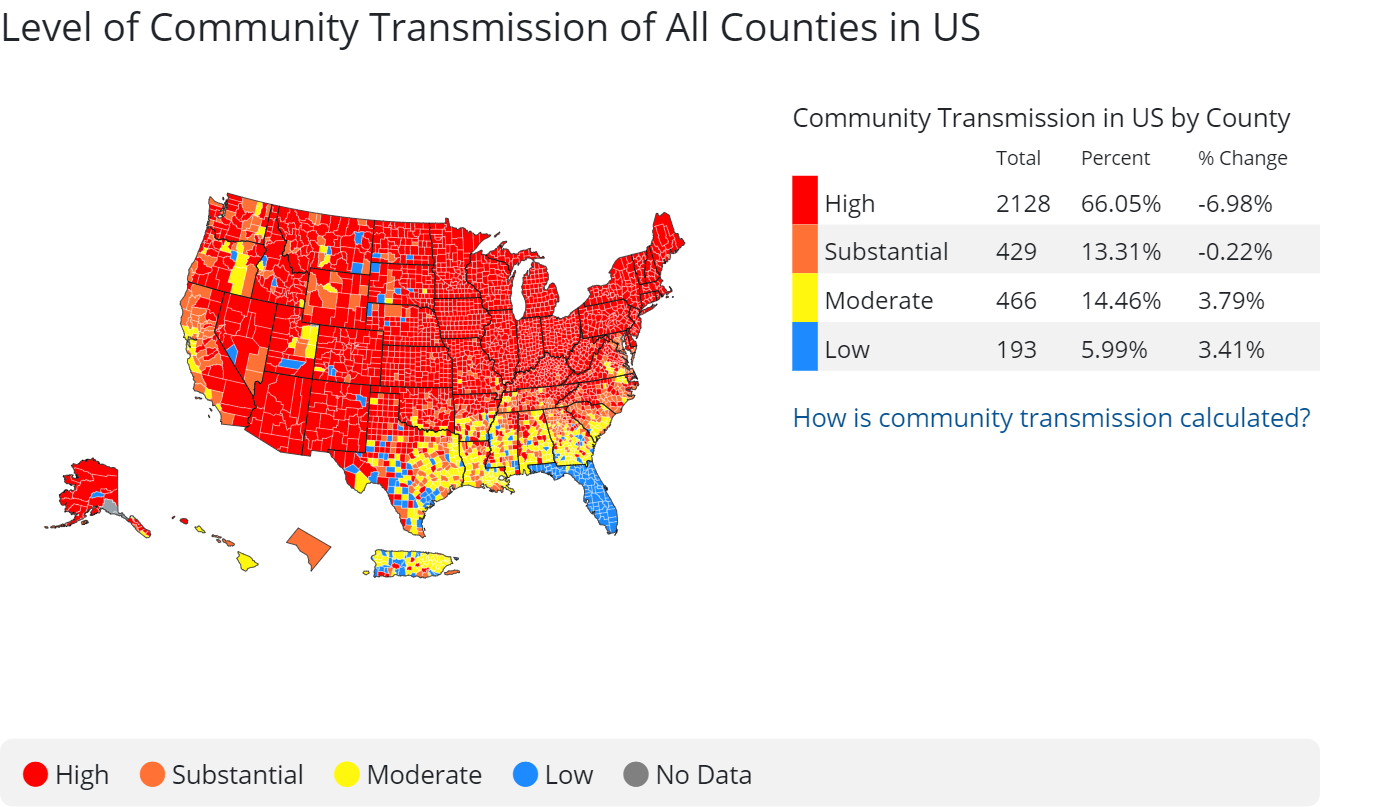
Florida is a blue state, according to the Federales

From the #Science-following experts at the CDC:

I hope that everyone is inspired to come visit in the near future, just in case our blue status does not last. Here’s the forecast for Jupiter, Florida (apologies to European readers for using the temperature units that God prefers):

#Science proves that you should be in Florida in the winter! (but, if the raging plague of summer 2021 is any guide, try to be somewhere else in July and August)

Separately, where in the above map can we see the effect of differential vaccination rates among states? If vaccination rate doesn’t affect transmission rate, why are we so obsessed with harassing the hesitant?

Related:

  • Optimum COVID-19 American lifestyle: Florida in winter; Maine in summer? (November 2020, just prior to availability of the vaccines that we were assured would halt transmission): Would the optimum lifestyle right now therefore be to live in a single-family home in a low-density part of Florida during the winter and in a single-family home in a low-density part of Maine during the summer? [Now that I am here in Florida, I realize that one need not be a single-family home to avoid public indoor spaces. Unlike in Manhattan or Boston, the typical apartment here is accessible without walking through an indoor lobby.]
Full post, including comments

Covid testing success story from Holland (the South African 61)

“The Netherlands finds 61 Covid cases in air arrivals from South Africa, and is checking for the variant.” (NYT):

Sixty-one people from two flights from South Africa to the Netherlands have tested positive for the coronavirus, Dutch health officials said early Saturday. It was unclear as of late morning local time if the cases were linked to the newly discovered Omicron variant.

The health officials tested 600 passengers who arrived on Friday morning at Amsterdam’s Schiphol Airport. Those who tested negative were allowed to leave the airport and quarantine at home, or to continue their journeys.

In other words, 10 percent of the folks who arrived in Holland tested positive for plague. Why should that be surprising in a world crammed with 8 billion tempting human hosts for a virus? 100 percent of these people would have tested negative for plague shortly before getting on the two planes. The Dutch require a negative COVID-19 test result for anyone coming in from outside the EU (and also for many of those arriving from within the EU):

You must show a negative COVID-19 test result if you are travelling to or returning to the Netherlands from outside the EU/Schengen or a COVID-19 risk area within the EU/Schengen. This requirement applies to everyone aged 12 or over. There are some exceptions. For example: people travelling within the EU who can show proof of vaccination or proof of recovery (a Digital COVID Certificate) do not have to show a negative COVID-19 test result.

The requirements are detailed on a separate web page:

(Maybe some virtuously vaccinated folks could have skipped the pre-flight test if they were simply changing planes in Amsterdam, but most countries now seem to require a negative test and therefore the number who were pre-tested would be close to 100 percent.)

Does the news from Amsterdam give us any reason to question our faith in testing?

Didn’t our heroine Elizabeth Holmes actually do better than this at Theranos? And yet she, despite being a victim of rape, is being prosecuted for the low quality of the Theranos tests.

Full post, including comments

Stop 20 COVID illnesses by hassling 178,322 people

“Revisiting the Bangladesh Mask RCT” covers the one “gold standard” paper looking at the question of whether ordering the general public to wear masks has any effect on coronaplague. The previously touted conclusions were that cloth masks were useless, but that ordering everyone to wear surgical masks could reduce plague by 11 percent. “Revisiting the Bangladesh Mask RCT” gives us some actual numbers:

In the Bangladesh Mask RCT, there were nC=163,861 individuals from 300 villages in the control group. There were nT=178,322 individuals from 300 villages in the intervention group. The main end point of the study was whether their intervention reduced the number of individuals who both reported covid-like symptoms and tested seropositive at some point during the trial. The number of such individuals appears nowhere in their paper, and one has to compute this from the data they kindly provided: There were iC=1,106 symptomatic individuals confirmed seropositive in the control group and iT=1,086 such individuals in the treatment group. The difference between the two groups was small: only 20 cases out of over 340,000 individuals over a span of 8 weeks.

If we assume that the authors got everything right, and this isn’t simply statistical noise, we’re left with the result that 178,322 poor souls had to be hassled by pubic health Karens in order to eliminate roughly 20 cases of COVID-19 (to be completely fair, a little more than that since the treatment group was larger).

Related (predictions of #Science versus outcomes, albeit not randomized controlled trials):

Motivation to visit Bangladesh:

Full post, including comments

Thankful that life insurance rates are still down

In COVID-19 is sure to kill you, but life insurance rates haven’t changed (August 21, 2021), I cited a December 2020 study of life insurance rates from 100 different companies. COVID-19 was killing so many healthy folks in their prime that the insurance companies hadn’t bothered to raise rates.

It’s been almost a year. Vaccines are available for the faithful. Every day we read about an unvaccinated person getting his/her/zir/their just deserts, gasping for breath and then dying on a ventilator in an overcrowded ICU.

What’s happening in the life insurance market? As Phil Connors found out in Groundhog Day, it is easy to talk to life insurance agents. I chatted with one outside Loxahatchee Ice Cream Company and learned that rates remain about the same or slightly lower than in 2019. Business was good. Consistent with “Your Vaccination Status Won’t Affect What You Pay for Life Insurance — for Now” (Money), the agent said that carriers were not interested in whether an applicant for insurance had been or would be vaccinated.

The second agent with whom I chatted was at the Stuart Air Show. He agreed that rates were flat-to-down compared to 2019, but his business had changed dramatically. “It used to be difficult to get people to focus on a plan,” he said, “but people have been sitting at home with plenty of time on their hands. It’s easy to get them on the phone and easy to sell them policies.” None of his carriers are interested in COVID-19 vaccination status (i.e., the elixir that we’re constantly reminded will determine whether we live or die is of no interest to the folks who have to pay $500,000 in the event that we die).

So… if we believe that life insurance actuaries are competent at their jobs and correctly pricing risk, we should be grateful that, despite the deaths we read about in the media, the world has not, in fact, become more lethal.

Speaking of the air show, here are some folks on whom I would not be in a hurry to write a policy (12 cylinders, 1,500 horsepower, 75+ years old; what could go wrong?):

Related:

Full post, including comments