Did either the Republicans or Democrats present a clear plan?

The conventions are almost over. Did either the Democrats or Republicans present something that could be characterized as a coherent philosophy or clear plan?

I struggle with the use of “left” and “right” in the U.S. because it seems as though these terms presuppose a philosophy of some sort and I haven’t been able to discern any (Group A trying to use government power to grab money from Group B is not a philosophy, but an expedient).

What did either party promise to do? For the Republicans, did they promise to do some stuff starting in 2021? If so, why didn’t they do deliver the promised items back in 2017 when they had a larger share of Congress? For the Democrats, what do they say that they will do?

Finally, did either party essentially make the same promises as Hugo Chavez? As I wrote in this book review:

According to Carroll, Chavez promised the same things as leaders in other countries:

  • To a country that already had a free public health care system for the poor he promised additional health care services/schemes
  • To government workers and people whose skills were not in demand he promised that they would be enriched through taxes on the most successful private sector workers (and that the new higher taxes would not discourage those private sector workers from continuing to work as hard as they formerly had)
  • To most voters he promised that they could enjoy a better standard of living without either working more diligently or learning new skills (i.e., the government would either raise wages or reduce prices).
  • That he would protect citizens from foreign invasion/influence via an expensive military.
  • That he would reduce income inequality.

I’m convinced that Chavez was the greatest politician of our age. He kept getting reelected in fair elections despite the country’s downward economic and social spiral.

Full post, including comments

Tesla implements my kid-in-hot-car alarm 17 years later

From 2003, “Lack of wireless Internet killing children”:

A recent AP story talks about the increasing number of children dying after being left in sealed cars by mistake. As a society we have 99% of the infrastructure necessary to prevent this. Most newer cars have an alarm system and automatic climate control. The alarm system implies a vibration sensor, a microphone (for glass breakage), and a little computer that is up and running all the time. The automatic climate control implies an interior thermometer.

With a bit of programming the car can recognize that (a) someone is inside the car making noise and moving around a bit, and (b) that the temperature is climbing to an unsafe level (or getting too cold in the winter). Now what? If we had a wireless Internet for the price of $3 in chips the car would be able to send an instant message to the owner and the local police to come back and check the car. (Of course you could do this now if you wanted to buy a $300/year cell phone subscription for the car, which is essentially what the GM OnStar system does, but most people wouldn’t be willing to pay the extra $300/year for something with such a low probability of ever being used. Hence the need for a better national infrastructure.)

From last week, “Tesla seeks approval for sensor that could detect child left in hot cars”:

Tesla Inc. asked the Federal Communications Commission (FCC) for approval to market a short-range interactive motion-sensing device that could help prevent children from being left behind in hot cars and boost theft-prevention systems.

So it wasn’t a terrible idea, but it did arrive 17 years after I thought it should have.

Related:

  • Car/Kennel (my 2003 plan for something like Tesla’s Dog Mode)
Full post, including comments

Shutting universities due to plague and the Cat in the Hat

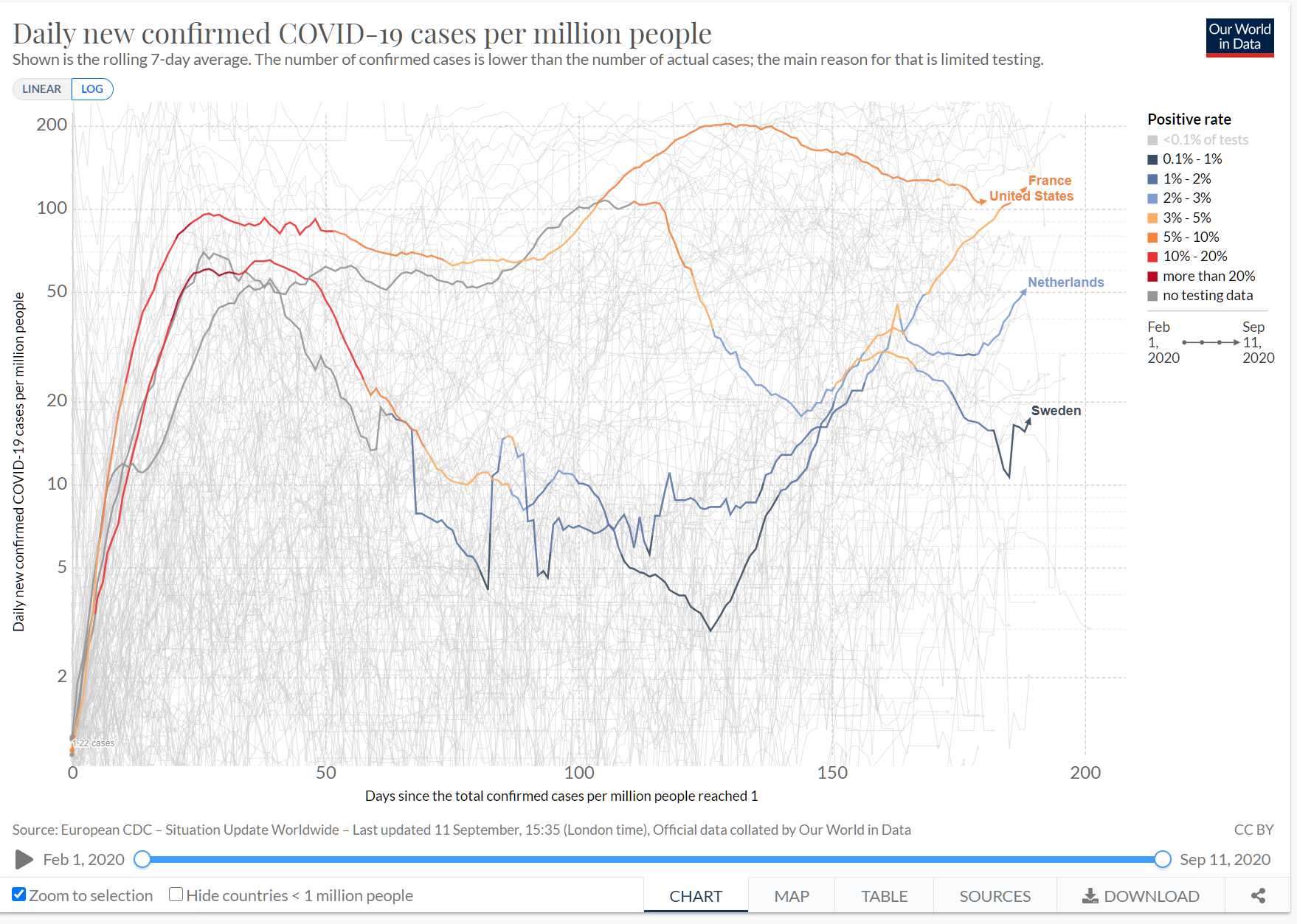
Just as the Swedes said back in March and April (interview with an MD/PhD), since coronavirus is now a permanent companion for humankind, if ye seek ye shall find. American universities have embarked on massive testing programs and are discovering that young humans can be and are infected with coronaplague. To protect our delicate society, they’re virtuously shutting down.

Does this make sense? Let’s refer to the infamous racist tract, the Cat in the Hat:

‘that is good,’ said the fish.
‘he has gone away. yes.
but your mother will come.
she will find this big mess!

and this mess is so big
and so deep and so tall,
we can not pick it up.
there is no way at all!’

If the students are sent home, yes, why won’t we find a big mess of coronaplague wherever they decide to live? Instead of gathering with fellow students at College A and possibly infecting middle-aged Professor B, they’ll gather with their high school friends and possibly infect their middle-aged parents, with whom they will be stuck living indefinitely. Is it plausible that the net result will be reduced overall plague?

Evidence in favor of shutdown: the Swedes closed their universities back in March, one of only a handful of things that they did other than simply giving the finger to the virus. But the idea there was to slow down the virus and avoid overwhelming the medical system (the Swedish government overestimated the need for ICU beds by more than 3X). The Swedes never said that closing universities would make the virus go away or keep young people from spreading it to each other within a few months.

Evidence against the effectiveness of any shutdown: “‘Do you really need to party?’ WHO asks world’s youth” (if old people are telling young people to do something “for their own good” we can almost always win by betting against, right?)

Full post, including comments

Essential shopping at the gun store

A friend here in Maskachusetts texted us regarding his latest trip to an essential business that remains legal to operate: “No employees in gun store wearing mask.” A bit later: “At another gun store. Also no masks. Cop in here also with no mask.”

An exchange ensued regarding why an excursion was worth the Covid-19 risk:

  • Me: You’re in a gun store because you don’t already have enough guns? How many guns do you think you have at this point?
  • Him: Over 400. My Glocks are getting out of date.
  • Me: Are there actually significant improvements?
  • Him: These are 1/4 inch slimmer.
  • Second friend: Everyone is moving to red dot sights on pistols.
  • Third friend: No, the pistols themselves are stagnant if not possibly retrograde, but the improvements have been in aiming them.
  • Him: These are 3-4 oz lighter than the previous alternative. But [Third friend] is right in that a Glock from 1988 is 98 percent as good as new one.

Separately, what will happen to all of the guns that Americans bought during the BLM protests? There were a lot of first-time gun owners who aren’t committed to maintaining proficiency at the range, cleaning the weapons, etc. Will there be a public health emergency of misfires a few years from now as these guns sit?

Firearms advice from our next president (however briefly he may serve):

(my friends above beg to differ; “Best home defense is 6 inch 300 BLK SBR with 30 round mag with silencer and Aimpoint.” What about Biden’s idea of a double-barreled shotgun? “Those are for clay shooting. No one uses those for home defense. They are for shooting small birds so have 22-inch barrels. And if you saw it off, it is life in prison.”)

Full post, including comments

Isaac Newton, investor

“Investors Have Been Making the Same Mistake for 300 Years” (The Atlantic) is an interesting article by Thomas Levenson, teacher of science writing at MIT.

Excerpts:

Already [in 1720] a wealthy man, Newton was usually a cautious investor. As the year began, much of his money was tucked away in various kinds of government bonds—reliable, uneventful investments that delivered a regular stream of income. He did own shares in a few of the larger companies on the exchange, including South Sea, but he had never been a rapid or eager market trader.

That had changed in the past few months, though, as he bought and sold into the rising market seemingly in the hopes of turning a comfortable fortune into an enormous one. By August, he’d unloaded most of his bonds, converting them and other assets into South Sea shares. Now he contemplated selling the rest of his bonds to buy still more shares.

He did sell nearly all of them. It was a disastrous choice. Within three weeks, the market turned. By Christmas, it had utterly collapsed. Newton’s losses reached millions of dollars in 21st-century money.

Even someone smart enough to steal credit for being the first to invent calculus was not smart enough to resist the Vegas-style appeal of the stock market.

I recommend this article, a rare break in the continuous stream of Trump-hatred from the Atlantic (owned by someone smart enough to have sex with a rich guy, thus illustrating a much more reliable path to wealth than trying to beat the S&P 500).

Related:

Full post, including comments

Post-Harvey Weinstein conviction world is better for women at work?

From exactly 10 years ago, in Business Insider, “15% Of Women Have Slept With Their Bosses — And 37% Of Them Got Promoted For It”:

Research from the Center for Work-Life Policy shows mid-level, professional women need powerful, senior executives to help promote them to the next level of management.

The problem is this: More often than not, superiors are males who are married.

Enter, sex.

In that same CWLP study, 34% of executive women claim they know a female colleague who has had an affair with a boss. Furthermore, 15% of women at the director level or above admitted to having affairs themselves.

And worse, 37% claim the action was rewarded: they said that women involved in affairs received a career boost as a result.

Now that Harvey W. is in prison, presumably the sex-for-jobs exchange is less common and fewer of the plum jobs are allocated to the most brazen. Are women who don’t have sex with bosses obtaining promotions noticeably sooner than ten years ago?

Related:

Full post, including comments

American schools will have to stay closed even after an effective COVID-19 vaccine is available

Turbine-powered Shutdown Karens: “A Vaccine That Stops Covid-19 Won’t Be Enough” (New York Times). Even if we have a vaccine that prevents coronavirus infection from turning into COVID-19 disease, it won’t be safe to leave our bunkers:

But even if one, or more, of those [vaccine development] efforts succeeds, a vaccine might not end the pandemic. This is partly because we seem to be focused at the moment on developing the kind of vaccine that may well prevent Covid-19, the disease, but that wouldn’t do enough to stop the transmission of SARS-CoV-2, the virus that causes Covid-19.

A vaccine’s ability to forestall a disease is also how vaccine developers typically design — and how regulators typically evaluate — Phase 3 clinical trials for vaccine candidates.

Yet the best vaccines also serve another, critical, function: They block a pathogen’s transmission from one person to another. And this result, often called an “indirect” effect of vaccination, is no less important than the direct effect of preventing the disease caused by that pathogen. In fact, during a pandemic, it probably is even more important.

That’s what we should be focusing on right now. And yet we are not.

Stopping a virus’s transmission reduces the entire population’s overall exposure to the virus. It protects people who may be too frail to respond to a vaccine, who do not have access to the vaccine, who refuse to be immunized and whose immune response might wane over time.

Preventing the very transmission of SARS-CoV-2, no less than stopping it from turning into Covid-19, should be a main priority of current efforts to develop the vaccines to end this pandemic.

So… the shutdowns will continue even after people stop getting sick and/or dying from COVID-19.

In other recent coronaplague news:

Full post, including comments

Tesla could have saved us from coronaplague

From Empires of Light: Edison, Tesla, Westinghouse, and the Race to Electrify the World:

As a regular solo customer of Delmonico’s, the polite and gracious inventor had let the highly trained staff know that he liked to have eighteen pristine napkins in a stack at his table. Very discreetly, Tesla used them to wipe the germs off each piece of heavy silverware, sparkling china, and crystal stemware before he partook of the chef’s many delights. Tesla’s germ phobia had developed after a fellow scientist allowed him to observe through a microscope the many normally invisible creatures inhabiting unboiled water. Tesla would later explain, “If you would watch only for a few minutes the horrible creatures, hairy and ugly beyond anything you can conceive, tearing each other up with the juices diffusing throughout the water—you would never again drink a drop of unboiled or unsterilized water.” So Tesla was ever vigilant in limiting his exposure to these vile microscopic bugs.

(Thank you to Steve for the Amazon gift card and suggestion to use it on this book!)

Nikola Tesla was also a pioneer in social distancing:

More and more [in the 1930s], Tesla lived in his own world, as big a romantic as ever, and as eccentric. He had his vegetarian meals specially cooked by the hotel chef and insisted that the help not get closer to him than a few feet, part of his phobia of germs.

How about #FollowScience and #BelieveTheExperts?

And in fact, on May 6, 1893, the officers of the Niagara Falls Power Company declared unequivocally that polyphase alternating current would be their choice. This was, at the time, still a very bold and highly controversial stance. The eminent Sir William Thomson, chairman of the International Niagara Committee and just elevated to become Lord Kelvin by Queen Victoria, cabled Adams on May 1 to head off the announcement. He proposed an ambitious DC plan, urging, “Trust you avoid gigantic mistake of adoption of alternate current.”

In other words, one of the greatest scientists of the age was sure that low-voltage DC was the way to electrify a country.

BLM at the 1893 Chicago World’s Columbian Exposition (named after someone who refused to #BelieveScience and lit up by Westinghouse AC):

On the hot Friday of August 25—Colored People’s Day at Festival Hall—the great abolitionist and leader Frederick Douglass wearily entreated in this era of Jim Crow, “All we beg is to receive as honest treatment as those who love only part of the country.”

How rich was the pre-electrified country?

… [in 1890] America’s population up to a mighty sixty-three million, according to the recent census. Politicians had taken to boasting that the United States was now a “billion dollar” country. It was, in fact, far richer than that, thanks to its relentless can-do commercial spirit and the reckless ambition of men like Thomas Edison and George Westinghouse. In the postbellum United States, the national wealth had soared to $65 billion, more than the accumulated holdings of all the aristocrats and commercial classes of Great Britain, Germany, and Russia combined. By 1890, in America, nearly $40 billion was invested in land and buildings, $9 billion in the sprawling network of railroads, and $4 billion in manufacturing and mining.

In other words, roughly $1,000 in wealth for every resident, roughly $28,000 in today’s mini-dollars. The U.S. had a net worth of $124 trillion as of 2014 (Wikipedia, assets minus debts). Population back in 2014 was 318 million (compare to 330.1 million today). So the per-person wealth in 2014 was $390,000, about $430,000 in 2020 dollars.

How did folks in New York City entertain themselves back then?

As an appalled Parkhurst and his two companions toured every kind of beer-soaked dance hall, cheap saloon, and sleazy brothel, they became astonished, genteel witnesses to a large and rowdy underworld thriving on illicit gambling, cheap liquor and beer, and organized, commercial sex catering to every kind of appetite. Gardner also had his own detectives out gathering affidavits. So when Reverend Parkhurst mounted his pulpit a mere month later on Sunday, March 13, 1892, he possessed documented evidence that Tammany was “rotten with a rottenness that is unspeakable and indescribable.” He had proof that 254 saloons and 30 brothels had been roaring with business just the previous Sunday. In the ensuing months, a grand jury handed down a few placating indictments, but little would change immediately. The urban poor (and a certain number of their better-off confreres) wanted jollity and dazed forgetfulness, be it craps, bawdy dance halls, or cheap, quick sex, for theirs were hardscrabble lives.

Reverend Parkhurst would be a big fan of coronashutdown!

George Westinghouse might not have been. In response to Edison’s arguments that high-voltage AC was dangerous, he responded that, statistically, electrocution was an uncommon cause of death:

Westinghouse tried to put it into perspective with the following: In the year 1888, sixty-four people in New York City were killed in streetcar accidents, fifty-five by omnibuses and wagons, twenty-three by illuminating gas, and all of five by electric current. This was not exactly an orgy of wanton and careless killing.

Westinghouse might have referred to the CDC’s excess deaths chart:

Speaking of death, there was a huge amount of enthusiasm for capital punishment via high voltage.

Two physicians leaned forward to examine Kemmler [the first electric chair victim]. The other doctors gathered around and dented Kemmler’s flesh to judge his state. Dr. Southwick smiled broadly as he came away from the fresh corpse. “There,” he exclaimed to a knot of witnesses who had quietly withdrawn to the far end of the chamber, “there is the culmination of ten years’ work and study. We live in a higher civilization from this day.

Higher civilization wasn’t completely civilized…

But the blood was continuing to ooze from Kemmler’s small finger wound. His heart still had to be beating. The physicians around the limp figure recoiled as one yelled in horror, “Great God! He is alive!” Another ordered, “Turn on the current.” “See, he breathes,” gasped a third. When Dr. Southwick and the others whirled around at these cries, they saw that Kemmler’s body was still limp, but his chest was heaving up and down. He seemed to be struggling for breath, and foam was seeping horribly from his masked mouth hole. “For God’s sake, kill him and have it over!” screamed one witness. The Associated Press reporter fainted on the wood floor, and several men carried him to a bench, where they fanned him. Durston had turned chalk white. He fumbled and reattached the scalp electrode. As the current flowed anew and Kemmler again went horribly rigid, “an awful odor began to permeate the death chamber.” Kemmler’s hair and skin were being visibly singed. A blue flame played briefly behind his neck. His clothes caught fire, but one of the doctors quickly extinguished them. “The stench,” reported the Times, “was unbearable.” After several minutes, the current was turned off, and as purple spots mottled Kemmler’s hands, arms, and neck, the doctors again declared him dead. The room reeked of burned meat and feces. The nauseated witnesses signed the death warrant for Warden Durston and then trailed out into the stone corridors, silent, shaken, several sick, the Erie County sheriff so distraught that tears trickled down his face. Three hours later, when the doctors had sufficiently recovered to perform an autopsy, they found that rigor mortis had stiffened Kemmler into a permanent sitting position. Examination of the body showed scorch marks wherever the electrodes and buckles touched the body. Kemmler had been “roasted” as well as a piece of overdone meat. Once the autopsy was complete and numerous organs removed, Kemmler’s baked corpse was taken and buried at night in the prison courtyard with great quantities of quicklime to dissolve all ultimate traces.

The author chronicles the cruelties inflicted on innocent animals, such as dogs and calves, in the years leading up to the execution of convicted criminals via electricity. This was the work of Edison affiliates, anxious to paint the Westinghouse AC system as dangerous.

Investment advice from Tesla turned out to be almost as bad as investment advice from Paul Krugman (November 2016: “It really does now look like President Donald J. Trump, and markets are plunging. When might we expect them to recover? … If the question is when markets will recover, a first-pass answer is never.”):

And what of Niagara Falls? the local reporters urgently asked. Tesla replied without hesitation: “The result of this great development of electric power will be that the falls and Buffalo will reach out their arms and will join each other and become one great city. United, they will form the greatest city in the world.”

(See “Can Buffalo Ever Come Back?” (2007), in which we learn that “The 1920s were the last real growth period for Buffalo” and that rail and road transportation reduced the importance of the Erie Canal. “Then the Saint Lawrence Seaway opened in 1957, connecting the Great Lakes to the Atlantic and allowing grain shipments to bypass Buffalo altogether.” Meanwhile “New York’s high taxes, burdensome regulations, and pro-union laws made Buffalo less attractive to employers than its more successful southern competitors. … Despite 50 years of population loss, Buffalo has one of the steepest metropolitan tax burdens in the country—including one of the nation’s highest local property tax rates, according to a 2003 study.”)

Vaguely related, the Glen Canyon Dam, circa 1990, captured with Kodak Tech Pan film:

It was legal to go to the Canadian side of the Falls just a year ago!

Full post, including comments

Covid paranoia will lead to inflation

Franklin Templeton manages about $700 billion in assets. What does their Chief Investment Officer for Fixed Income think Covid-19 will lead to? Inflation!

An article by Sonal Desai:

Americans still misperceive the risks of death from COVID-19 for different age cohorts—to a shocking extent;

The misperception is greater for those who identify as Democrats, and for those who rely more on social media for information; partisanship and misinformation, to misquote Thomas Dolby, are blinding us from science; and

We find a sizable “safety premium” that could become a significant driver of inflation as the recovery gets underway.

How can a virus drive inflation? I think that her argument is that Americans with money will spend like crazy to protect themselves from the virus, e.g., buying first class airline seats or choosing airlines with blocked middle seats. Meanwhile there will be contraction in supply. We’ve already seen this in real estate. The rich are spending even more for country estates and for fixing up country estates. It is impossible to get a contractor because they’re already hired and the additional workers they might want to hire are relaxing on $600/week (but maybe that will change soon?).

These misperceptions are destroying our economy:

This misinformation has a very concrete adverse impact. Our study results show that those who overstate deaths among young people are more cautious about making purchases, more reluctant to travel, and favor keeping businesses and schools shut.

I.e., the Swedes who gave the finger to the virus are likely to do relatively better than Americans (but we stole a bigger piece of land from the Native Americans than they did, so we might still be richer).

What does the cower-in-place nation look like, emotionally?

How did the misperceptions arise? Facebook Shutdown and Mask Karens: “People who get their information predominantly from social media have the most erroneous and distorted perception of risk.” Traditional media was also responsible, says Desai:

Fear and anger are the most reliable drivers of engagement; scary tales of young victims of the pandemic, intimating that we are all at risk of dying, quickly go viral; so do stories that blame everything on your political adversaries. Both social and traditional media have been churning out both types of narratives in order to generate more clicks and increase their audience.

Stories that emphasize the dangers of the pandemic to all age cohorts and tie the risk to the Administration’s handling of the crisis likely tend to resonate much more with Democrats than Republicans. This might be a contributing factor to why, in our survey results, Democrats tend to overestimate the risk of dying from COVID-19 for different age cohorts to a greater extent than Republicans do.

Related:

Full post, including comments

Election of President Kamala Harris will end the BLM protests?

From The American Conservative (both of them?):

There once was a general who fought a war to protect slavery. That’s not how he would have described it. He would have said he was fighting to protect his way of life from a foreign invader. Whatever construction he put on it, his so-called way of life rested on the sweat wrung from forced labor on plantations and gold earned from buying and selling black flesh.

That general was Samori Touré. The West African chieftain is honored today by black nationalists for resisting French imperialism in the Mandingo Wars of the late nineteenth century, but thousands of Africans were enslaved by Samori’s raiders in the course of building up his empire. After his final defeat in 1898, for more than a decade, columns of refugees tramped into French Guinea to return to their home villages as they escaped or were liberated from Banamba or Bamako or wherever Samori’s men had sold them.

Ta-Nehisi Coates named his son Samori, after the great resister. That means that Between the World and Me, the best-selling anti-racist tract of the current century, which takes the form of letters from Coates to his son, is addressed to someone named after a prolific enslaver of black Africans.

Unless the U.S. is packed with hidden Deplorables that poll-takers can’t find, at some point in 2021, the U.S. will be led by a president who identifies as “Black” (though we also have to accept the possibility that Kamala Harris changes her racial and/or gender ID between now and then).

Is it safe to say that the BLM protesters/rioters will go home for eight years, starting November 4? We didn’t have BLM riots during the Obama Administration, right? (“Obama Says Movements Like Black Lives Matter ‘Can’t Just Keep on Yelling’” (NYT, 2016) turned out to be prescient!)

Every day of the Obama administration was a day in which life for Black Americans became more challenging (see “Effects of Immigration on African-American Employment and Incarceration,” NBER 2007) Yet as long as there was a person in the White House who identified as “Black,” it apparently did not bother lower-income Black Americans that their jobs, apartments, and infrastructure were taken over by immigrants

Full post, including comments